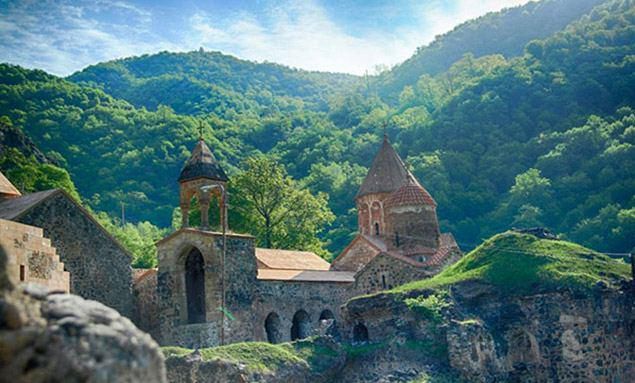

Khudaveng Monastery
A Living Link to Caucasian Albanian History
A Sacred Landmark in the Caucasus
Tucked away in the lush hills of Azerbaijan’s Kalbajar district, Khudaveng Monastery—also known as Dadivank—stands as a powerful reminder of the Caucasian Albanian past. This ancient site is more than just a collection of old stones; it’s a place where centuries of faith, culture, and craftsmanship come together.
Deep Roots
Khudaveng’s story goes back to the earliest days of Christianity in the region. According to local tradition, the monastery was built where St. Dadi, a follower of Thaddeus the Apostle, first spread the Christian message in the 1st century AD. The oldest parts of the complex, including a basilica, date to the 9th century, showing just how long this place has been a center for worship. Over the years, different rulers left their mark on Khudaveng. One of the most notable moments came in 1214, when Arzu Khatun, the wife of Prince Vakhtang of Khachin, had the main cathedral built in memory of her husband and sons—a story still told in the inscriptions found on the site.
Architecture and Atmosphere
The buildings at Khudaveng are a blend of spiritual meaning and skilled artistry. The main cathedral, with its domed roof and detailed stonework, is a classic example of Caucasian Albanian design. Around it, you’ll find chapels and other buildings decorated with khachkars (carved cross-stones) and intricate patterns, all testifying to the talent of the craftsmen who worked here. The monastery also includes living quarters for monks and clergy, hinting at its role as both a spiritual and educational center. The use of local stone and the way the complex fits into the landscape show a deep respect for both nature and faith.
More Than Just a Building
Khudaveng was much more than a place to pray. It was a hub for the Albanian Church, which played a key role in the spiritual life of the Caucasian Albanian people. The monastery was also a center for learning and for copying manuscripts, helping to keep Christian teachings alive in the region.
Today’s Efforts
After Azerbaijan regained control of the Kalbajar district, there’s been a renewed push to protect and celebrate Khudaveng’s heritage. The Albanian-Udi Christian community in Azerbaijan is now actively involved in the life of the monastery, holding important religious ceremonies and making sure the site remains a vibrant part of the country’s cultural landscape.
Khudaveng Monastery is more than a relic of the past—it’s a living symbol of the Caucasian Albanian legacy. Its stones have witnessed centuries of devotion, creativity, and change. As restoration and preservation continue, Khudaveng stands as both a monument to history and a reminder of the enduring power of faith and tradition.